Follow-Up Forms
Vision Screening or Comprehensive Eye Exam: Know the Difference
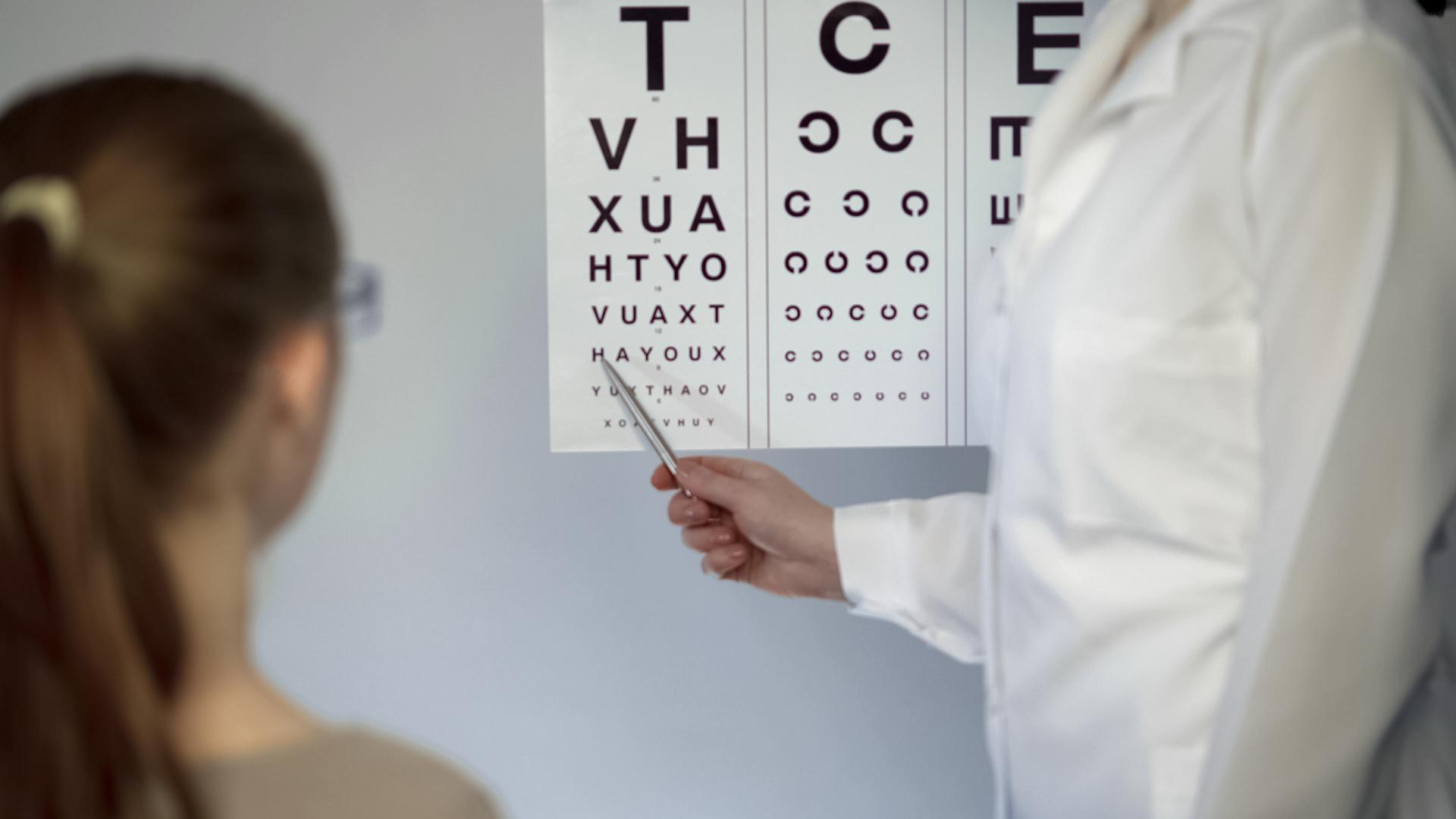
- Vision Screening: A short examination that can indicate the presence of a potential vision problem. It cannot diagnose exactly what is wrong with a child’s eyes.
- Comprehensive Eye Examination: Generally lasts 30 to 60 minutes and is performed by an ophthalmologist or optometrist. Doctors review medical and visual history; conduct additional testing; diagnose a vision problem; provide treatment; and refer patient to another doctor or specialist, if needed.
Children are referred for a comprehensive eye exam when they do not pass vision screening. Those who pass may also be referred if they are at a high risk of having a vision disorder because of a medical or developmental reason.
Common Vision Impairments and Potential Educational Impact
| Impairment | Definition |
|---|---|
| Amblyopia or lazy eye | Abnormal development of connection between the brain and eyes |
| Astigmatism | Irregular shape of the cornea or lens |
| Hyperopia or farsightedness | Nearby objects are blurry, far objects are in focus |
| Myopia or nearsightedness | Far objects are blurry, nearby objects are in focus |
| Strabismus or wandering eye | Eye misalignment, oriented in different directions |
Signs/Symptoms of Vision Impairments: Double vision, Blurred vision, Glare or halo, around light, Headaches, Dizziness, Nausea, Eye strain (tearing, burning, redness), Squinting or head turning, Closing one eye, Excessive blinking and Fatigue.
Impact of Impairments: Reduced attention span, Difficulty reading or doing close-up work, Difficulty reading or copying from board, Poor motor skills/hand-eye coordination, Impaired depth perception, Learning difficulties, Difficulty working from computer and Negative self-image.
High Risk Groups for Vision Impairments
Both genetic factors, including family history, and environmental factors play a role in the development of vision disorders. The presence of some vision disorders increases the likelihood of developing other vision disorders such as strabismus and amblyopia.
A number of neuro-developmental disorders, such as cerebral palsy, Down syndrome and autism spectrum disorders, are also associated with higher rates of visual problems.
The most significant preventable risk factor in children is maternal smoking. Children of women who smoked during pregnancy have higher rates of strabismus, hyperopia and astigmatism.
Local Low-Cost Vision Resources
7671 Quarterfield Road #304 Glen Burnie, MD 21061
(410) 572-0655
Accepts State Insurance
2560 Solomons Island Road Annapolis, MD 21401 (410) 573-2020
Accepts State Insurance
6718 Ritchie Highway Glen Burnie, MD 21061
(410)768-6100
Accepts Most State Insurance
137 Mitchells Chance Road Suite 120 Edgewater, MD 21037
(410)-956-2200
Accepts Some State Health Insurance
7000 Arundel Mills Circle Hanover, MD 21076
(410) 799-2770
Offer Interpreter Services/Accepts Most State Insurance
407 George Clauss Boulevard Severn, MD 21144
(410) 582-9949
Accepts Most State Insurance
All Children See - For Citizens, Uninsured or unable to pay that have an eye concern.
Medical Assistance Program Enrollment and Resources:
Medical Assistance for Families (MCHP) | Health Care Enrollment Assistance | Administrative Care Coordination (ACC) |
|---|---|---|
School Vision and Hearing Screening Calendar
Anne Arundel County Department of Health vision and hearing technicians and school nurses conduct mandated vision and hearing screenings in public schools each year. The screenings are for children in preschool, kindergarten, first and eighth grade, and for students new to Anne Arundel County schools. Special education students receiving speech therapy may also be recommended for screening. Department vision and hearing technicians also administer vision and hearing screenings to MSDE approved private/nonpublic schools and special education programs to ensure that the appropriate children are screened.
Children who wear glasses should bring them to school on the day of the screening.
Date | School |
|---|---|
Friday, October 16, 2026 | Chesapeake Montessori |
Monday, October 19, 2026 | Seven Oaks Elementary |
Tuesday, October 20, 2026 | Arundel Middle |
Wednesday, October 21, 2026 | Carrie Weedon |
Wednesday, October 21, 2026 | Deale Elementary |
Wednesday, October 21, 2026 | Hillsmere Elementary |
Thursday, October 22, 2026 | Severna Park Middle |
Friday, October 23, 2026 | Severn School (Lower) |
Friday, October 23, 2026 | Severn School (Middle) |
Wednesday, October 28, 2026 | Meade Middle |
Thursday, October 29, 2026 | Meade Middle |
Friday, October 30, 2026 | Primrose School of Gambrills |
Friday, October 30, 2026 | Annapolis Area Christian (Middle) |
Monday, November 2, 2026 | Glen Burnie High |
Friday, November 6, 2026 | The Harbour School at Annapolis |
Friday, November 6, 2026 | Montessori Intl. Children's House |
Monday, November 9, 2026 | Jones Elementary |
Monday, November 9, 2026 | Mary Moss at J. Albert Adams Academy |
Tuesday, November 10, 2026 | Glen Burnie High |
Wednesday, November 11, 2026 | Hebron Harman Elementary |
Thursday, November 12, 2026 | High Point Elementary |
Friday, November 13, 2026 | St. Martin's in the Field |
Monday, November 16, 2026 | Germantown Elementary |
Tuesday, November 17, 2026 | Freetown Elementary |
Wednesday, November 18, 2026 | Brooklyn Park Middle |
Thursday, November 19, 2026 | Brooklyn Park Middle |
Friday, November 20, 2026 | South County Pre-Kindergarten Co-Op |
Friday, November 20, 2026 | The Summit School |
Children are screened in order to detect vision or hearing problems that may impair a child’s ability to perform successfully in school. If a potential deficiency is detected, a letter is sent to the parents informing them of the results. If a child does not pass the vision screening, the child is referred for a comprehensive eye exam. The parents are advised to contact the child’s doctor for further testing and advice. Those who pass may also be referred for a comprehensive eye exam if they are at a high risk of having a vision disorder because of a medical or developmental reason.
For more information on the School Vision and Hearing Program, call 410-222-6838.