

Common Tick-borne Illnesses
- Lyme Disease: Most common in the Northeast, mid-Atlantic and upper-Midwest regions of the United States, characterized by a "bull's-eye" rash, fatigue and joint pain. Lyme disease is the most common tick-borne disease in Anne Arundel County, as well as in Maryland.
- Babesiosis: Malaria-like parasitic disease causing headache and muscle pain; can be life-threatening.
- Ehrlichiosis and Anaplasmosis: Bacterial illnesses causing flu-like symptoms; often transmitted by Lone Star and Deer ticks.
- Alpha-gal Syndrome: A serious, potentially life-threatening red meat allergy triggered by the bite of a Lone Star tick. Symptoms, such as hives, nausea and severe stomach pain, typically appear 2-6 hours after consuming meat or dairy.
How is it spread?
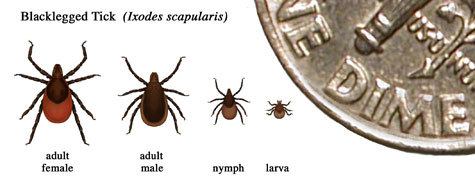
Tick-borne diseases are transmitted to people through the bite of infected ticks. Many of these ticks are as small as a pinhead, making them very hard to see. Consequently, many people never even feel or notice a tick on their body. In most cases, the tick must be attached to a person for at least 24 hours before a pathogen is transmitted. While these ticks are most active from May through October in tall grass, brush and wooded areas, they can be present year-round in smaller numbers. Additionally, pets and mice can serve as vectors that bring ticks into closer proximity to humans. While various tick-borne illnesses exist, they all share this common mode of transmission.
What are the Symptoms?
Symptoms of tick-borne illnesses typically appear within one month of a bite. Because these symptoms often mimic common viruses like the flu, they can be tricky to diagnose and may require specialized laboratory tests to confirm.
Knowing what to look for can help you seek treatment early when the infections are easiest to cure.
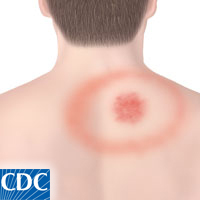
Early Warning Signs (1 to 4 Weeks)
- The Signature Rash: About 75% of patients develop a skin lesion. While some get the classic "bull's-eye" rash (a red center surrounded by a clear ring), which is specific for Lyme disease, other rashes may look like an expanding solid red patch.
- Flu-Like Aches: You may experience a sudden fever, chills, headaches and profound fatigue.
- Muscle and Joint Pain: Generalized aches and joint stiffness are common early indicators.
If Left Untreated
Important: Early medical intervention is crucial. If left untreated, the infection can spread and lead to severe, long-term health complications.
- Systemic Complications: Over time, the disease can cause serious damage to your joints (causing chronic arthritis), heart and nervous system.
- Pregnancy Risks: Some tick-borne infections can be passed to an unborn child, potentially causing birth defects or miscarriage.
If you suspect you've been bitten by a tick and are experiencing any of these symptoms, contact a healthcare provider immediately.
How can tick bites be prevented?
- Wear light-colored, long-sleeved shirts and pants that you can tuck into your socks when working or walking in areas likely to have ticks.
- Spray arms and legs with insect repellent containing DEET (up to 30% for adults, 10% for children) or picaridin. For occasional exposure, adults can spray clothing with an insecticide, permethrin, for more protection. Use repellents and insecticides as directed by the manufacturer. Follow your doctor’s advice for extended use or use on children, during pregnancy or if you have skin problems.
- It is very important that parents conduct a thorough inspection of children. Look along the hairline, in the hair and ears, and where clothing fits snugly. Because ticks can spread other serious illnesses, a whole body inspection every three to four hours is safest when in grassy or wooded areas.
- After coming indoors, wash and dry clothes as soon as possible, preferably at a hot temperature. Wash off insect repellent remaining on the skin.
- Remove leaves, brush and tall grass around houses, pathways and gardens.
- Treat and discourage infestations of mice in or near houses.
If You Find a Tick
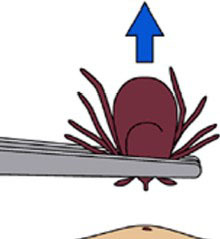
- Remove the tick right away, but do not touch it with your bare hands. Use tweezers to grip the tick behind its head and as close to the skin as you can. Gently pull it off. If tweezers are not available, use your fingers wearing gloves or a tissue. Do not smash or burn the tick. Tick Identification is available through the Maryland Department of Health (MDH).
- After removing the tick, wash your hands with soap and water or waterless alcohol-based hand rub. Clean the tick bite with an antiseptic such as iodine scrub, rubbing alcohol, or soap and water.
- Mark a calendar on the date you found the tick and watch for symptoms for at least a month.
- If a rash develops or you experience other symptoms within 3 to 32 days, call your physician immediately.
For more information on tick-borne illnesses, call the Anne Arundel County Department of Health at 410-222-7254.